SEARCH
Enter your search term below:
Close 
Enter your search term below:
WORLD LEADING BUSINESS SUPPORT
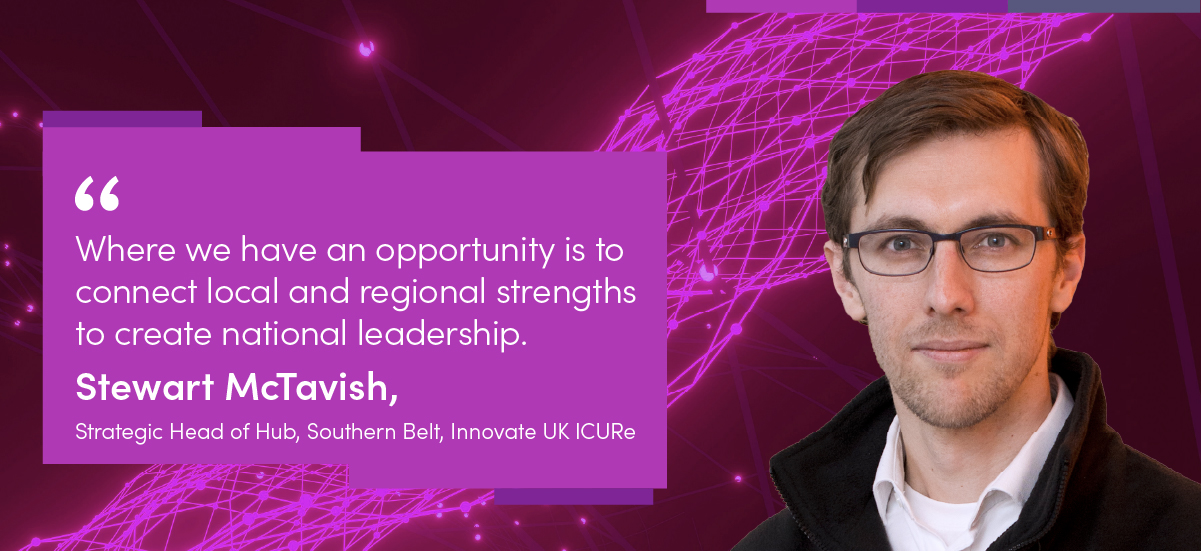
As a new Strategic Head of Hubs appointed within the ICURe Delivery Partner network, what does the role entail, and what opportunities does it create?
My role was established in response to a shift in the innovation landscape. In a nutshell, I’m playing “connector and catalyst” – linking world-class research, national industrial strategy, and the real needs of founders on the ground. I work with universities, research institutes and delivery partners across the South, while also shaping a national alumni strategy for over 400 spin-outs and 5,000 ICURe participants.
Drawing on 20 years in university innovation ecosystems, my job is to help founders find the right people, programmes, and investors at the right time. Ultimately, I’m here to support entrepreneurial leaders turn talent and world-leading research into world-leading companies that make our society better.
What is the vision behind the Strategic Head of Hubs role, and how will it complement existing ICURe regional operations and programmes?
Following the government’s renewed focus on industrial strategy and Innovate UK’s evolving priorities, we needed to connect the dots to give ICURe the best chance to succeed in this new environment. That’s where the three Strategic Heads of Hub come in – opening new opportunities at both regional and national levels for spin-outs and first-time founders across the North, Midlands and South of the UK.
I see the role as a way to knit together what’s already working brilliantly across the ICURe network and take it to the next level. Alongside Tony Walker, Head of the Northern Hub, and our forthcoming Head of the Midlands Hub, we’re looking to link local and regional excellence as part of a national team that leads the world.
The impact of the businesses and individuals across the ICURe teams is already evident. Our priority is to understand what’s working and where regional teams want to go next, while aligning existing success with national industrial strategy. That means connecting ICURe spin-outs with the priorities of research councils and Innovate UK, so each hub is plugged into national capabilities, programmes, and opportunities.
How will you work with hubs, universities, delivery partners and wider innovation networks to strengthen support for researchers and entrepreneurs?
I want to start by immersing myself in the local and regional communities across the South of the country – meeting partners, visiting research institutes, engaging with delivery teams, and connecting with wider networks. I want to understand what makes them tick, what’s already strong, where the pressure points are, and what people are trying to achieve. That local insight is the foundation for meaningful support.
Where we have an opportunity is to connect local and regional strengths to create national leadership -spotting where capabilities, people, and ideas don’t yet meet, and then catalysing those connections.
Sometimes that’s as simple as connecting a local research leader to a national community or introducing a founder to an alumnus who has already navigated similar challenges in another part of the country.
For researchers and entrepreneurs, my aim is to make the path feel clearer and less isolated. By joining up hubs, universities, delivery partners, and wider innovation networks, I want it to be easier to see where to go next, who to talk to, and how to plug into ICURe and Innovate UK at each stage of the journey.
Alumni are a key part of ICURe’s long-term impact. How do you see hubs supporting alumni engagement, collaboration and knowledge sharing?
One of the biggest opportunities we have is to stop thinking about ICURe as a series of individual programmes and start thinking about it as a long-term community.
I think the SETsquared ICURe Alumni Network has an important role to play in making that happen. Alumni aren’t just people who completed Discover or Explore – they’re researchers and emerging founders continuing to develop. Our job is to make sure those touchpoints join up rather than feeling like separate experiences.
The hubs are central to that because they understand their local innovation ecosystems, but they can also connect people beyond them. That might mean introducing alumni within the same city or university, bringing together founders from different delivery partners, or connecting someone working in a highly specialised field with the right national network, wherever they’re based. The aim is to make the SETsquared ICURe Alumni Network visible, accessible and genuinely useful at every stage of a founder’s journey.
Alumni also represent one of ICURe’s biggest long-term impacts. Even when someone doesn’t go on to create a spin-out, they return to their university with a much stronger understanding of customers, markets and commercial opportunity. That can help build a culture where research impact and entrepreneurship become a natural part of academic thinking. By bringing alumni back as mentors, speakers and role models, hubs can help that culture continue to grow.
Just as importantly, founders can learn from one another. Whether through case studies, playbooks or honest conversations, the ICURe Alumni Network should make it easier to share lessons and avoid repeating the same mistakes.
How does this role contribute to ICURe’s place within the wider Innovate UK ecosystem, and what opportunities do you see for greater collaboration across the innovation landscape?
I see ICURe as a vital bridge within the wider Innovate UK ecosystem.
We sit between research funded through UKRI and the industrial priorities driven by Innovate UK and government, helping founders understand where their innovation fits within the UK’s future economy.
By making those links clearer, we strengthen the pipeline from research through to real-world impact. Rather than the ICURe journey ending as a particular programme, it’s really a starting point where founders become part of a much broader innovation ecosystem. That means connecting companies into relevant programmes, partnerships and investment opportunities, while helping regional strengths contribute to national priorities. Ultimately, the more aligned the ecosystem becomes, the easier it is for great research to become successful businesses that deliver economic and societal impact.
What are your priorities for the first 6–12 months, and what are you most excited to achieve through the Strategic Head of Hubs role?
I want to build relationships early and often – across delivery partners, research institutes, delivery teams, and wider networks. ICURe has been a success since it began in 2014, and there are many nuances to how it operates. I can’t understand the impact, ambitions and challenges of its stakeholders without first engaging with them.
I recognise that I’m stepping into a programme built on high-performance and impact. ICURe has helped generate hundreds of millions in follow‑on funding and licensing income, while supporting hundreds of spin-outs and thousands of researchers. My job isn’t to reinvent that, but to ask how we can turn strong delivery into an even more coherent, strategic system.
How can ICURe alumni reach out to you, and what practical things can you help with?
The main message is that I’m always open to being contacted. Whether we’ve connected before or not, please don’t hesitate to get in touch. Email is the easiest way to reach me, as LinkedIn messages can be easy to miss.
I want to offer support because not every challenge is the same. When alumni reach out, I’m not just offering advice – I’m offering perspective and a bit of emotional support for what can be an incredibly hard and lonely journey.
I can help sense-check where you are, draw on hundreds of startup journeys to suggest practical next steps, and flag shortcuts or connections you might be missing. Sometimes that combination of clear, grounded actions and honest reassurance is what makes the difference between feeling stuck and feeling able to keep going.
Get in touch: [email protected]
What excites you most about the potential of the research, innovation and researchers in South England and South Wales?
From a personal standpoint, I’m excited to step away from the Cambridge bubble and into a region with huge potential for innovation and growth. Opportunity and talent are spread far more widely than the traditional hotspots – it’s not just about Russell Group universities or London. I’m already seeing incredible work happening in places that don’t always get the spotlight.
I’m hugely optimistic about research and innovation across South England and South Wales. The combination of talent, strong ecosystems and a supportive national context makes the region a great place to be for innovation, and I can only see it going from strength to strength.
Get all the fresh insights first! Stay up-to-date with all the
latest investment news, blogs and all things SETsquared.
Close
SETsquared is a partnership between


Close