SEARCH
Enter your search term below:
Close 
Enter your search term below:

WORLD LEADING BUSINESS SUPPORT
That assumption is becoming harder to sustain.
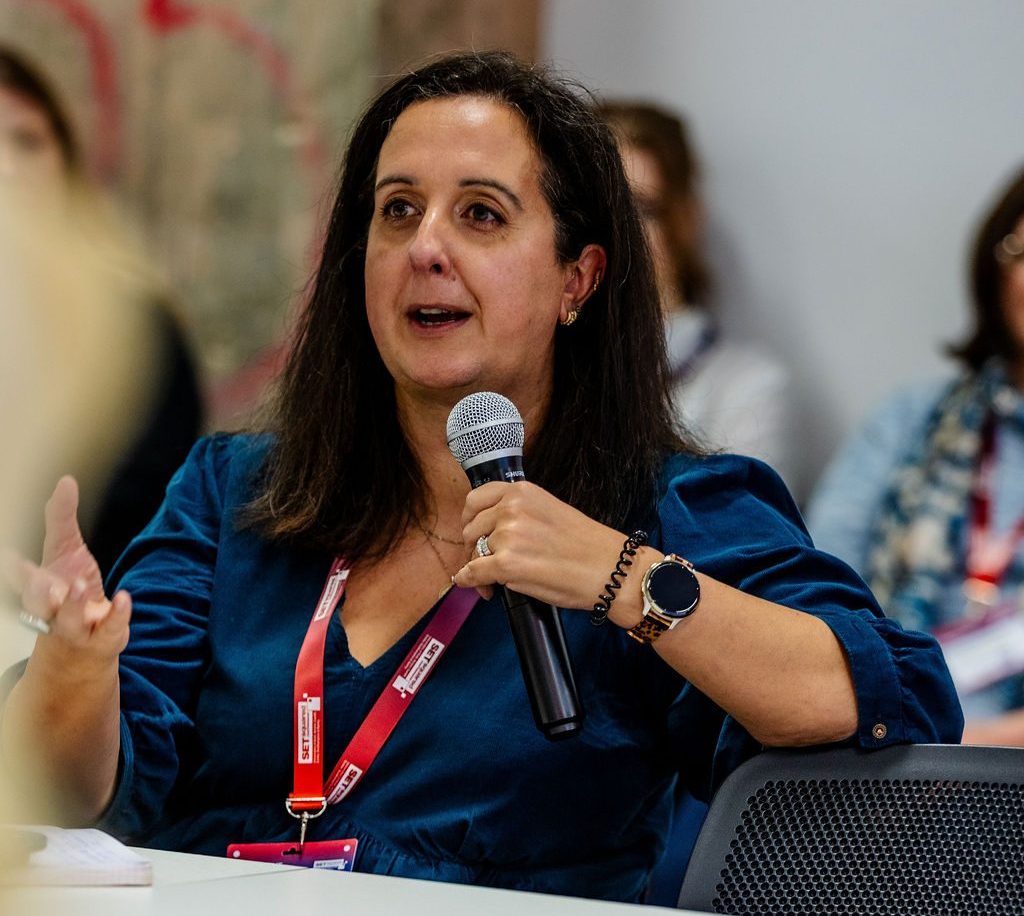
That challenge sat at the heart of our latest Innovation Insights session, featuring Debbie Johnson, Head of Innovation, Talent and Skills at Innovate UK.
The UK continues to invest heavily in science, research and emerging technologies, particularly in areas expected to shape long-term competitiveness. Yet translating technical breakthroughs into commercially successful businesses has often proven more difficult than generating the breakthroughs themselves.
For innovative SMEs in particular, growth rarely stalls because ambition disappears. More often, momentum slows when capability cannot scale at the same speed as opportunity.
This has changed the landscape for innovation support. Supporting innovation is no longer only about helping companies build new products. Increasingly, it means helping them build the teams, leadership capability and workforce infrastructure required to carry those products through to adoption and growth.
This formed the backdrop to Innovate UK’s evolving approach. One-size-fits-all is no longer the way forward; instead, Innovate UK is reshaping its model around a clearer ambition: an integrated, tailored approach to support businesses from innovation to growth.
Debbie outlined how Innovate UK is evolving its approach through its newly launched prospectus. This signals a move away from viewing support as a sequence of projects and towards supporting businesses across a longer growth journey.
The ambition is clear: help more breakthrough ideas become commercially successful businesses that remain and scale in the UK.
Rather than distributing support broadly, Innovate UK is concentrating effort where it believes the UK has distinctive strengths and genuine opportunities to lead. Those areas include advanced manufacturing, clean energy, creative industries, defence, life sciences and digital, alongside frontier technologies such as AI, cyber security, engineering biology, semiconductors and quantum.
This reflects a growing recognition that competitive advantage is increasingly created at the intersection of strong research capability, commercial readiness and long-term investment. Innovate UK’s position is that these sectors already represent areas of significant UK strength – with deep scientific expertise, established ecosystems and the potential to compete internationally. All that remains is the right support to help start-up and spin-outs scale.
This is where ‘Velocity’ comes in, Innovate UK’s new model for business support for innovative, high-potential businesses. Shifting from one‑off, project-based grants towards a longer-term, “concierge-style” relationship, Velocity will support businesses across their entire growth journey.
High-potential SMEs will now be identified through a clear framework that looks at team strength, technology and market readiness, and fit with key UK sectors and frontier technologies. Sector-specialist growth teams will then stay close to these businesses, offering deep technical and market understanding and effectively acting as a “tech due diligence engine” that provides investors with greater confidence.
For deep tech ventures, this means more tailored, stage-appropriate support, better alignment across funding, expertise, and talent needs, and a smoother path from early innovation to investment and scale. Looking ahead, Velocity aims to systematically support more UK-based SMEs by backing the right companies in the right way, embedding people, skills, leadership and place into every aspect of Innovate UK’s support.
Innovate UK is also rethinking the fundamentals that make innovation succeed in practice – particularly the people, skills and leadership capabilities that sit behind every successful scaling business.
These innovation fundamentals are framed as market readiness, people and place, with a deliberate move to put talent and leadership on the same footing as technology and finance. Rather than treating skills as an add-on or someone else’s responsibility, Innovate UK aims to hardwire these considerations into every investment decision and every stage of the innovation journey. Innovate UK has developed a set of skills and roles frameworks that make the talent needs of innovative businesses much more visible and actionable.
First, the Private Sector Innovate Roles Framework. Innovate UK have mapped the key roles found in innovation-driven companies, highlighting how they evolve as a business grows. For instance, early on, a founder is almost doing everything – ideation, key decisions, driving products, customer acquisition and daily operations. As the company scales, this becomes unrealistic. Developing more structure and specialist roles is key – from senior management to commercial roles in sales, marketing, business development and more.
In parallel, the Innovation, Commercialisation and Entrepreneurship Skills Framework focuses on reinforcing the skills that sit alongside technical expertise, such as opportunity recognition, experimentation, commercial thinking and entrepreneurial decision-making. It starts from the principle that innovation can happen in any role, not just in technical or R&D posts.
These frameworks are already being used by partners such as Greater Manchester and Glasgow City Region to design innovation literacy programmes, support apprentices and align local skills initiatives with the needs of high-growth firms. Across both cities, the frameworks are shaping support for innovative businesses and early‑career individuals across the region. The early progress and outcomes of are set to be published in July.
They are also being linked to emerging ISO standards on innovation management. This takes the framework from guidance into something that can underpin formal standards, audits and training, giving businesses, educators and regions a shared, internationally recognised language for the innovation skills they are trying to develop.
Taken together, this work is about ensuring that UK businesses can access the right people with the right capabilities at the right time, and that the wider skills system is ready to support them, not play catch-up.
Alongside these skills frameworks and regional pilots, Innovate UK and its partners are also building out the networks and touchpoints that help innovative SMEs find support, collaborators and opportunities in practice.
What emerged during the session was a recognition that technical talent cannot be developed through a single intervention. Instead, support is increasingly being designed as a connected pipeline. Programmes such as UKRI’s Future Leader Fellowships focus on creating longer-term capability, backing individuals with the potential to lead research and innovation activity within both businesses and academia.
Alongside this, initiatives such as TechFirst reflect an attempt to widen and strengthen the pipeline much earlier. The programme aims to increase support for research talent and create targeted initiatives to improve participation and progression into technical careers, supporting undergraduates through bursaries and placements, and expanding pathways into specialist areas.
There is also a regional dimension through TechLocal, which focuses on developing opportunities around local growth clusters and workforce needs across SMEs. The programme is actively funding around 40 local projects, building links between education, research and employment, rather than creating isolated talent schemes.
At the national level, the Catapult Network continues to strengthen the connection between technological advancement, regional capability and workforce readiness. Via national innovation centres, Catapult is helping businesses translate academic research into commercial applications and understand how workforce capabilities need to evolve.
The support ecosystem for SMEs is shifting. Innovate UK is taking a deliberate step away from short-term, one-off grants and programmes towards building skills, leadership capability and capacity into the everyday support businesses receive, rather than treating them as a bolt-on further down the line. Capability is being developed in parallel with the technology itself, not after it.
That shift changes what competitiveness really depends on. Access to emerging technology alone isn’t enough. It must be matched by the talent, leadership and workforce readiness needed to adopt and scale it, and that’s a harder thing for many SMEs to build than the technology itself.
Talent strategy belongs at the centre of that picture. Not a separate workstream sitting alongside innovation, but one of the things that determines whether innovation scales at all. Innovate UK’s evolving approach reflects this reality: helping SMEs not only grow technically but also build an organisation that attracts and develops talent in tandem.
Get all the fresh insights first! Stay up-to-date with all the
latest investment news, blogs and all things SETsquared.
Close
SETsquared is a partnership between


Close