SEARCH
Enter your search term below:
Close 
Enter your search term below:

WORLD LEADING BUSINESS SUPPORT
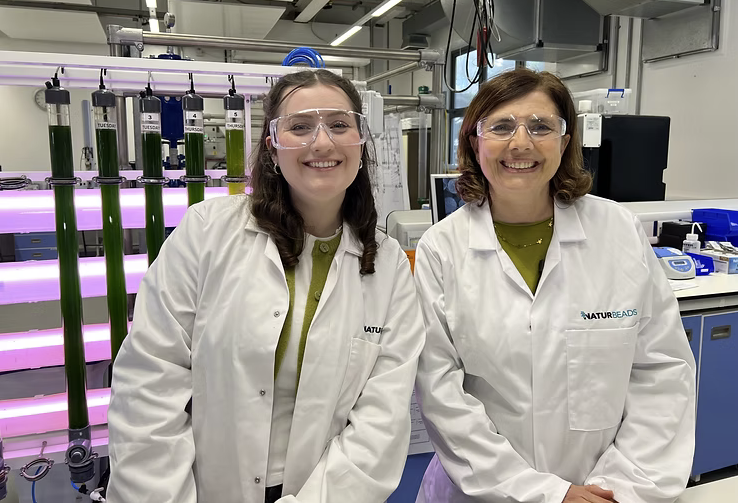
Naturbeads is solving one of our biggest environmental problems, the use of harmful microplastics in everyday products, by developing a biodegradable, cellulose-based alternative. Its patented process eliminates microplastic pollution at the source and can be used in a range of products, including cosmetics, paints, detergents, coatings, leather, and other consumer and industrial applications.
The €4.1m will be used to partially reimburse Naturbeads for the construction of a new production plant in Puglia, as well as to support R&D costs as it gears up to full commercialisation over the next two years.
The grant is part of an EU funding programme, the European Structural Fund, that helps finance bespoke economic and social development projects in selected areas. Benefiting from a young, educated local workforce, the Puglia region is increasingly recognised for its strong focus on business development, innovation, and digital transformation.
“Due to its versatility and durability, tiny microspheres of plastic are a popular ingredient in a range of everyday products”, said Giovanna Laudisio, CEO of Naturbeads. “For example, they’re routinely found in make-up that stays on your skin for only a few hours … but when you wash your face, they end up in the drain and from there in the oceans where they last for centuries.”
“Tiny particles of plastic are found in our food, our bodies – they’ve even been discovered in Antarctica – and are putting at risk both our personal health and the health of the planet.”
Using a patented process, Naturbeads refines cellulose, a natural material that is the building block of plants, into perfectly round microspheres, making it an ideal replacement for plastic microparticles. The plant-based product is biodegradable and can be used in a range of products.
“We’ve already reached a key milestone by successfully starting production in our plant,” said Giovanna Laudisio. “Our current focus is to complete the startup of different sections of the plant so that in June, we can ramp up production and start serving our customers around the world who are waiting for our product.”
In the coming years, regulatory changes will see demand for sustainable alternatives to microplastics rise as new EU rules restricting their use in production come into effect. For example, bans on:
“We’re nature’s fix to using microplastics as we tackle the problem at source while maintaining the same performance and cost as plastics,“ said Giovanna Laudisio. “The use of our innovative technology isn’t restricted to cosmetic goods. It can be employed in multiple industries to eliminate the use of microplastics in making paints, coatings, detergents, adhesives, softeners, and even biomedical devices.”
Get all the fresh insights first! Stay up-to-date with all the
latest investment news, blogs and all things SETsquared.
Close
SETsquared is a partnership between


Close