SEARCH
Enter your search term below:
Close 
Enter your search term below:
WORLD LEADING BUSINESS SUPPORT
Q. You talk about creating “Venture Scientists”. What does that mean, and what qualities help researchers make the transition into founders?
At Conception X, we help PhD and postdoctoral researchers explore whether their technology could become a business. As a deep tech PhD accelerator, we support them as they build a company and work towards their first rounds of investment. They join a cohort of fellow researchers, the Venture Scientist 100, with access to coaching, mentoring and a roadmap to help them build a business alongside their research.
Becoming a Venture Scientist isn’t about leaving your scientific identity behind. It is about bringing a founder’s perspective to the technology you know so well. What problem does it solve, who needs that solution and what would make them willing to pay for it? Researchers often have more of the skills needed to make that transition than they realise.
Think about what happens in the lab. You test a hypothesis, learn when something doesn’t work, adjust your approach and try again. Building a business calls for that same willingness to test and learn; you’re simply applying it to customers, markets and product development. The challenge is to bring that scientific curiosity into a commercial setting.
Q. For someone who has completed ICURe and validated a potential market, what should they be thinking about next?
That is an exciting point to reach. Through ICURe, you’ve gathered evidence of a potential market and developed a clearer picture of who your customers could be. Now the question changes from “Is there an opportunity here?” to “How do I turn this opportunity into a business?”
I would start with your first customer. Who will they be, and how are you going to reach them? Get to know them and the problem they need you to solve, then start turning those conversations into relationships, collaborations, and letters of intent. Alongside that, work through the commercial questions around value creation, revenue, and scale. This is where your commercial strategy starts to take shape.
Market validation gives you a foundation. The next step is to use what you’ve learned to build the business.
Q. What is the biggest mindset shift required when moving from researcher to a company founder?
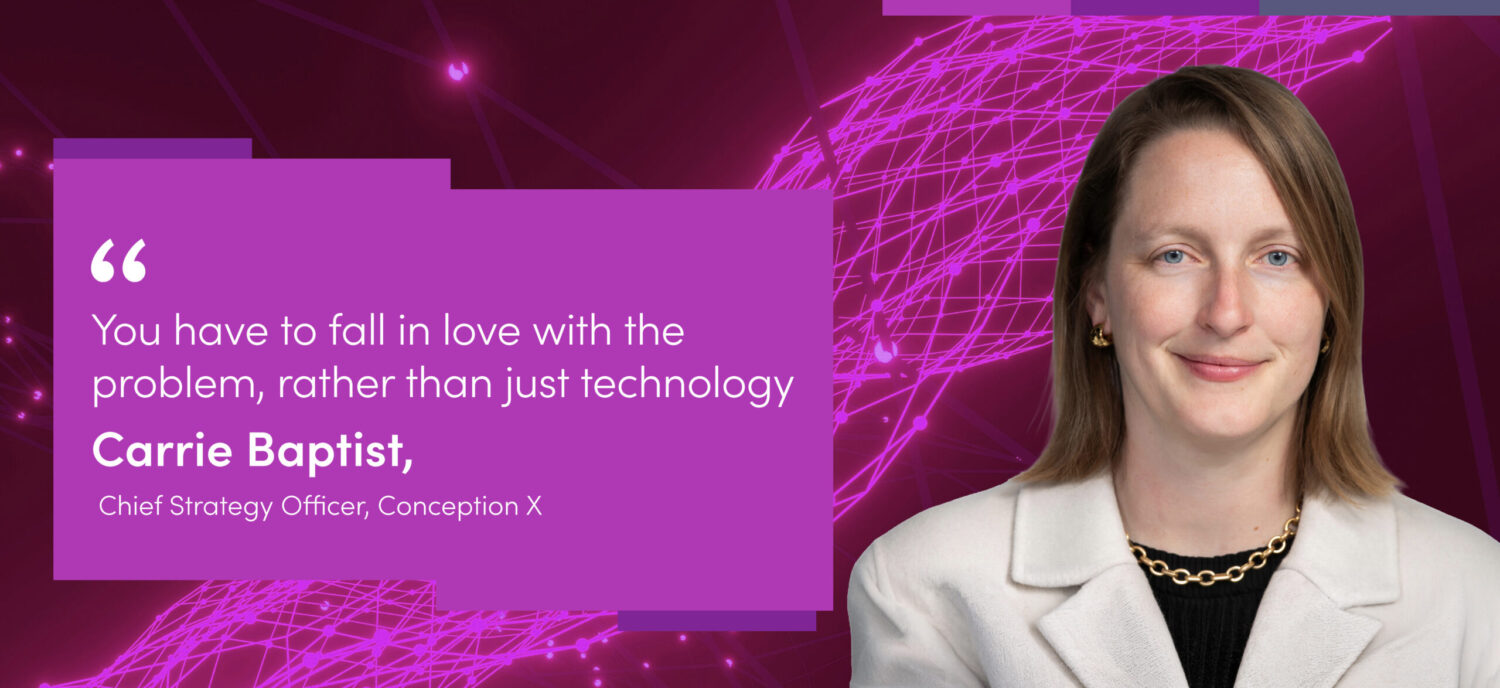
You have to fall in love with the problem, rather than just the technology. That can be a real shift when you know the science so well and are excited by what it can do. As a founder, you have to look at it through the customer’s eyes. That’s what moves you from developing something interesting to building something people actually need.
Q. How can researchers decide whether to spin out a company, license their technology or pursue another route to commercialisation?
I’d start with you, not just the technology. What would you enjoy spending your days doing, and where do your strengths lie? The route has to make sense for the technology, but it also has to be one you want to take. There’s no single right answer.
If you want to stay in academia, licensing may be a good option. You can look for someone else to take the technology forward while remaining involved as an adviser, without taking on the role of CEO. If you want to build and lead a business yourself, building a spin-out or a start-up may be the right path.
Think about the kind of career and adventure you want to take on, as well as what makes sense for the opportunity. You might want to stay in academia, put yourself fully into building a company or keep a foot in both worlds.
Q. What mistakes do you commonly see research-led founders making in the early stages, and how can they avoid them?
Not talking to customers. There can be a feeling that the technology isn’t ready yet, so founders keep refining the prototype or trying to optimise those final details before speaking to anyone. There can also be a worry that discussing the idea will mean somebody copies it or takes the technology.
You absolutely need to think about what you disclose and protect the proprietary aspects of your technology. However, the problem you are trying to solve, the market and the idea behind it are things you should be talking about early and often. Get out there, ask questions and gather as much input as you can. Those conversations help you understand what customers actually need and can shape your technology. You don’t have to wait for a perfect prototype to start learning.
Q. What makes a deep tech venture investable, and what should founders focus on to demonstrate their potential to investors?
A deep tech venture is about much more than its intellectual property (IP). IP is the starting point, but you need to turn that technology into a product that solves a problem for somebody, ideally one that matters across a sector or industry.
Investors are looking at whether you have the people and the plan to make that happen. That means building a strong team and network around you, alongside a credible commercial strategy that demonstrates customer relationships and some indication of traction or intent. Your technical roadmap matters too, particularly how it responds to what you’ve learned from customers.
Investors also need to understand how you’ll get close to generating revenue. Deep tech can take time to develop, so you may not be making sales in week one or even the first year. However, you should know who your early customers are and why they will buy. Ultimately, investors need to believe not only that the technology is unique, but that you and your team can credibly turn it into value.
Q. With so many accelerators, incubators and venture programmes available, how should founders decide what support they need? At what point might Conception X be a good fit for an ICURe alumnus?
I think it’s brilliant that there are so many accelerators, incubators and venture programmes available. They’re a fantastic resource, and I’d encourage researchers to make use of them. There’s no need to reinvent the wheel: learn from other founders, use the networks and take advantage of the coaching.
It’s worth looking carefully at what a programme asks in return. Be cautious about anything that makes a claim on your intellectual property or asks for equity. It’s important to understand those terms, particularly at an early stage.
Think about the support you actually need, too. That might be the fundamentals of commercialisation, a peer community of other founders or, once you understand your initial market, a programme with more specific industry connections.
For an ICURe alumnus, Conception X can provide the peer community and support needed to take the next steps towards building a business. You’ve already done the early work to understand your potential market and explore the opportunity, so Conception X can help you move towards raising your first investment round. It’s not designed to be commercialisation 101, but it will support you to move beyond identifying an opportunity and towards building a company.
Q. How can researchers balance their academic commitments with building a business, particularly in the early stages?
It’s not easy, but being in a university can give you some significant advantages when you’re building a deep tech venture. Look at the grants available, use the lab space and build within the university environment where you can. It can help you develop the business before you have to take on the costs of paying for your own facilities and equipment or building a network from scratch.
There are successful founders who take different paths, so there’s no single formula. However, you don’t necessarily have to walk away from academia to start exploring what your research could become.
It’s profoundly exciting, joyful, invigorating, and motivating to see your research translate into impact. We find that having that purpose can make the research feel even more meaningful.
Q. What is the one piece of advice you would give an ICURe alumnus who has validated their opportunity but isn’t sure what to do next?
The next step is to think about whether building a company is the right path for you. One of the best ways to find out is to speak to people who have been there and done it. Researchers can sometimes assume that entrepreneurship isn’t for them, or that they need to fit a particular founder stereotype. You don’t have to be a naturally extroverted, larger-than-life person to build a company.
Get all the fresh insights first! Stay up-to-date with all the
latest investment news, blogs and all things SETsquared.
Close
SETsquared is a partnership between



Close