SEARCH
Enter your search term below:
Close 
Enter your search term below:
WORLD LEADING BUSINESS SUPPORT
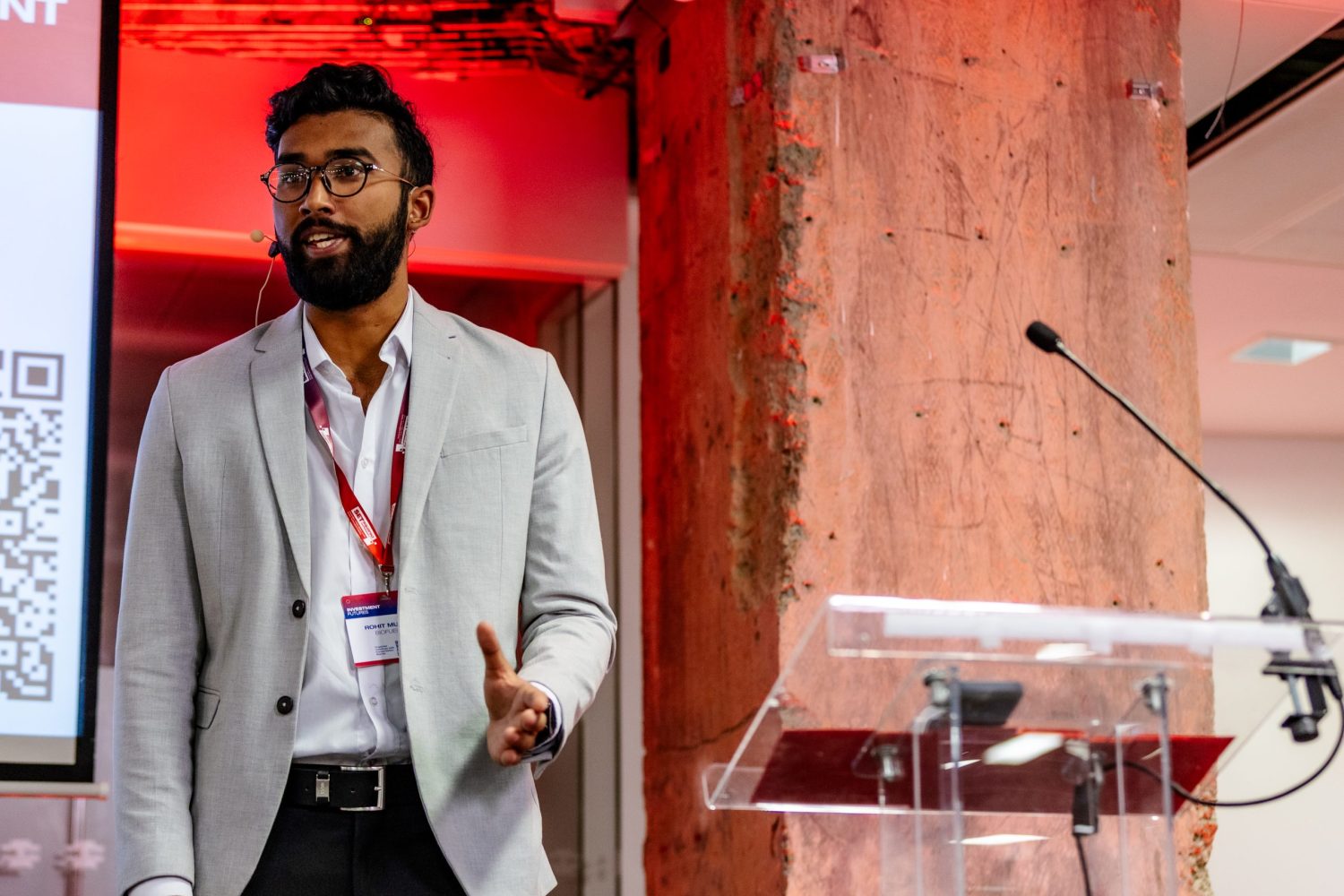
(Image above shows a previous pitching company at an Investment Futures event)
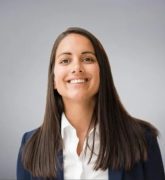
For Emilie Syed, Investment Principal at Zinc, these are questions shaped by experience. Her own route into venture capital began not with a plan to become an investor, but with a move away from academia into technology transfer. Today, she invests at the very earliest stages, working with founders to turn ambitious ideas into investable companies.
Ahead of Investment Futures Spotlight: Medtech, a dedicated medtech investment event, taking place on 29 September 2026 at Barclays Eagle Labs in Shoreditch, we spoke to Emilie about her journey, the changing early-stage funding landscape and what she looks for when backing the next generation of medtech founders. The event will bring together investors, founders and the wider innovation ecosystem to explore emerging opportunities across UK medtech.
Finding my way from academia into venture capital
“I didn’t set out to join venture capital when I left academia. In fact, I didn’t know what venture capital was.
“I joined a technology transfer office because it was the furthest from the university that I dared go, and happened to fall into the investment team.
“My role at the university was identical to that of an associate in a multi-stage investment fund: I was managing a large portfolio of companies, investing at different stages of company growth and supporting companies from inception, especially with syndicating investment rounds.
“That was how I got to know Parkwalk, who work closely with UK universities, so when an opening came up, it felt natural to apply. At Parkwalk, I was investing at a slightly later stage. It felt a little like moving to the other side of the table – instead of supporting companies from the university side, I was making investment decisions from the fund side.
“I was also doing an MBA while working at OUI, which turned out to be a really good thing because I was able to apply everything I was learning in a very concrete way. I’d really recommend that combination. Working at a technology transfer office while doing an MBA was a really good educational and professional experience.
There is still a major funding gap at inception
“One of the reasons I decided to join Zinc was because I realised that, although there is a lot of focus on the funding gap at later stages, there is still a huge gap right at the inception stage. I think this has been overlooked by many, and it has been exacerbated over the last couple of years by the market downturn.
“A lot of pre-seed investors have moved towards seed stage. This has left a real gap at inception. It’s compounded by the fact that companies now need more money. The goalposts at seed stage have moved as well, so companies are expected to get further before they raise their next round.
“There’s therefore been an increase in demand for early-stage funding at the same time as some of that funding has disappeared from the UK ecosystem.
“If the pre-seed stage isn’t sufficiently funded, we could ultimately find that the quality deal flow simply isn’t there for growth funds further down the line. It’s important that we continue to fund the very earliest stages, because that’s where the diversity of innovation comes from.”
Meet founders before they’re ready to pitch
“At Zinc, we absolutely like to meet people before they’ve spun out. We invest at a very early stage and must be first funds in, so we really want to get to know founders as early as possible. That doesn’t mean we don’t want to see a polished proposition. When you come to our Investment Committee, we do want to have a very polished deck and proposal. But we work together with founders to get there .
“We want to meet founders early and collaborate with them to develop a sound proposition, which will then come to our Investment Committee. We also pull on a network of experts, later-stage investors, industry specialists, key opinion leaders and academic experts to inform not only our investment decision, but also the development plan that the company proposes. For me, it really is a partnership – not just between us and the founders, but with the wider ecosystem as well.
“I increasingly hear that it takes a village to build a company, and I think that’s absolutely right. We need to have all the experts in the conversation as early as possible to make sure that everyone is aligned. We’re expecting companies to develop very quickly and deliver outsized returns, so it makes sense to line everyone up early and make sure we’re all working towards the same goal.”
What makes a high-potential founding team?
“Ambition is probably the main thing we’re looking for.
“Resilience goes hand in hand with that, as does a real passion for taking the company forward. There are few reasons to embark on an entrepreneurship journey, especially a venture-capital-backed one, if you don’t have an absolute passion for the end goal.
“That’s particularly true in deep tech and medtech, where you’re often looking at long R&D programmes, significant validation and regulatory milestones and considerable capital requirements. You have to be prepared for the journey.”
Think about the next round from the beginning
“One thing I think is really important for founders is to think about the pathway beyond their first investment. Zinc invests at pre-seed and doesn’t follow on at seed. We see ourselves as the ideal partner to take a company towards a successful seed round.
“That means we need to understand what seed-stage investors are looking for and what they expect to see when they invest. The goalposts move all the time, so it’s really important to keep that active conversation alive and make sure that you’re working towards the right milestones.
“You also need to make sure you have sufficient funding to clear those milestones before you run out of money. With our Science for Impact Fund, we’ll be doing £500,000 tickets. The important thing is that the funding needs to be aligned with the milestones the company needs to achieve.
“We also look at the role of non-dilutive funding. Most of our companies, by the time they get to seed, have around a 50:50 dilutive-to-non-dilutive funding ratio. Most of our portfolio companies don’t have significant revenue at this stage, and that’s completely normal. These are science-heavy companies. There’s a lot of R&D and validation to be done, and many will have to go through a regulatory journey before they can be on the market.
“You wouldn’t necessarily expect meaningful commercial sales before significant capital investment. What matters is whether the company is making the right progress towards the next milestone. Some companies may generate revenue through a pilot, collaboration or co-development agreement, but you wouldn’t necessarily expect them to be a fully fledged commercial entity at this point.”
Don’t rely on the NHS alone
“For UK medtech companies, the NHS can be an incredibly valuable partner. Seeing the NHS on a pitch deck isn’t a deterrent for us. It can be a fantastic pilot environment and a really good setting for proof of concept or early collaboration.
“But we also recommend having an international strategy from day one. You don’t want to rely solely on the NHS because the timelines can be long, and ultimately the commercial opportunity will be smaller than when you’re addressing a global market.
“For medtech, that might mean pursuing a UK and European strategy, or a UK and US strategy. You don’t know which one will move faster, so it’s worth getting the ball rolling on both and seeing which one gives you traction first.
“The NHS can be part of the strategy, but it shouldn’t necessarily be the whole strategy.”
AI is everywhere – but it’s no longer a differentiator
“We see AI in pretty much every pitch deck now. It’s practically ubiquitous, so it’s not a differentiator in a deck anymore. Most companies, including life sciences companies, will make use of AI in some way – whether that’s a bioinformatics platform or helping to inform the outcomes of a drug development route.
“I think that’s broadly positive. AI is helping to accelerate the path and, so far, make it leaner. But it’s important to remember that using AI at scale can also be expensive. Computing is becoming a very significant capital expenditure, and some of the biggest raises we’ve seen have been for AI companies because of that infrastructure requirement.
“I’m particularly interested in where AI can move beyond being a tool and actually become part of the core proposition. So far, a lot of the applications we’ve seen have been on the more mundane side – helping with administrative tasks in clinical settings or drug development. Those applications can still have a significant impact.
“But I think we’ll soon move into more exciting areas of the life sciences and medtech ecosystem. We’re already seeing virtual labs, for example, but there still needs to be a wet-lab component. We’ll also need more automation and robotics. There’s quite a lot of technological development that needs to catch up to enable AI to achieve its full potential.”
Don’t overthink the first conversation
“If you’re an academic founder thinking about approaching Zinc, my biggest piece of advice is: don’t overthink it. Come and talk to us if you think you have something. We can help flesh it out, and we can help form it into an opportunity.
“It doesn’t have to be a formal pitch to start with. It’s much better to start the conversation early and begin exploring whether there is something there than to wait until you think everything is perfect. Ultimately, building a company is a journey, and nobody expects you to have all the answers at the very beginning.”
Meet the next generation of UK medtech
These themes Emilie highlights – early-stage capital, investment readiness, commercialisation and the changing medtech landscape – will come together at Investment Futures Spotlight: Medtech on 29 September 2026.
Hosted by SETsquared in partnership with Barclays Eagle Labs and Zinc, the event will showcase emerging medtech opportunities from across the SETsquared ecosystem, spanning medical devices, diagnostics, clinical products and digital health.
For investors, it is an opportunity to discover promising companies early and build relationships with the founders behind them. For founders, it offers the chance to connect with investors and understand what the market is looking for.
Register your placeGet all the fresh insights first! Stay up-to-date with all the
latest investment news, blogs and all things SETsquared.
Close
SETsquared is a partnership between



Close