SEARCH
Enter your search term below:
Close 
Enter your search term below:
WORLD LEADING BUSINESS SUPPORT
Before thinking about job titles or headcount, founders need to be honest about where the business is today, what success will look like over the next 12–18 months, and which capabilities truly matter to get there. Without that clarity, hiring becomes reactive; with it, talent decisions become strategic.
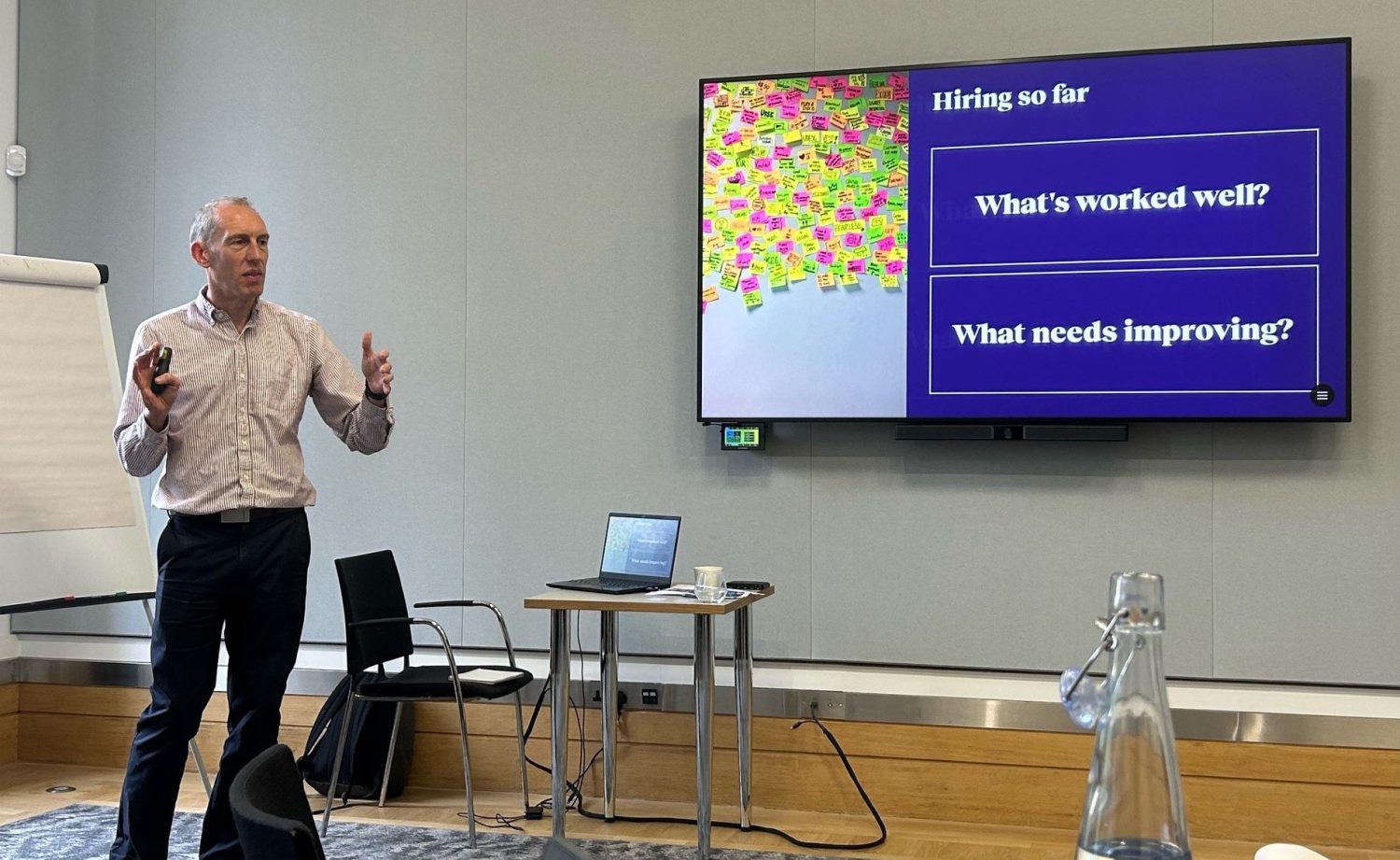
This came through strongly during the Executive Talent Agenda roundtable at Investment Futures 2025 – the ability to move slowly yet with pace and purpose.
When founders begin thinking about hiring, job titles and salaries often take centre stage. These things do matter; you need to get them right, but in my experience, they’re rarely what ultimately persuades someone to join an early-stage business.
What truly influences great candidates is alignment with the mission, the founders, and the values that shape how the business operates.
In early teams, culture often develops implicitly. Founders instinctively know how to work together because of shared history, sometimes stretching back years. However, once you start hiring beyond that core group, culture must be articulated more deliberately. Candidates want to understand what it feels like to work in the business, how decisions are made, and why the company exists beyond commercial outcomes.
Founders who take the time to communicate culture, purpose, and vision clearly, through conversations, their digital presence, and the hiring process itself, consistently attract stronger, more committed talent.
One of the most common mistakes I see is treating hiring like a checklist. We’ve got the tech, we’ve got the product – now we need sales. That logic is understandable, but often too simplistic.
Every early-stage business needs to cover key functions, but not necessarily through traditional, permanent roles. The right question isn’t “who should we hire?”, but rather “where are we right now? Where are we trying to go? And what options do we have?”. Taking the time to slow down and plan enables a more efficient hiring process that brings in the right talent at the right time.
In many cases, that means using short-term, freelance, or fractional expertise to hit a specific milestone, rather than committing to an expensive long-term hire too early. Doing so can reduce risk and leave the business in a much stronger position when it does make sense to hire permanently.
Speed still matters – top talent won’t wait forever – but the thinking needs to happen early, not mid-hire.
AI has changed the recruitment landscape dramatically, making it harder to assess quality from a CV alone. Application volumes are higher than ever, which is exactly what any business would want when beginning a hiring-process; however, the challenge now lies in the quality, not the quantity. With so many candidates using tools like ChatGPT to ‘tailor my CV’, applications are becoming increasingly uniform, leaving founders wondering where to begin.
For first-time founders, there’s also the challenge of hiring for roles they’ve never done themselves. Knowing what good looks like in sales, machine learning, or commercial leadership isn’t always intuitive for founders operating in technical roles, and one wrong hire in a small team can have a disproportionate impact.
At ISL Talent, recruitment is at the core of what we do – but our role rarely starts or ends with a job description.
Ultimately, it’s about helping founders make people decisions with confidence, not in isolation.
Sometimes, founders need delivery: helping with hiring their first engineer or building out a commercial function. Other times, what they really need is perspective. A different way of thinking about roles, visibility of the external market, or honest advice on timing.
We also spend a lot of time connecting people across the ecosystem: founders, funders, and advisors who can help each other move forward. Our small, curated events are a big part of that, creating safe spaces for founders at similar stages to share experiences, learn from one another, and avoid common pitfalls.

One thing that came through strongly at Investment Futures is that no matter how advanced the technology, building a great business always comes back to people. Talent strategy isn’t a one-off task; it’s a thread that runs through every stage of growth.
If founders are clear on their purpose, deliberate in their hiring strategy, and open to different routes for building capability, they give themselves a far better chance of scaling sustainably and building teams that stay with them on the journey ahead.
Download the Investment Futures reportsGet all the fresh insights first! Stay up-to-date with all the
latest investment news, blogs and all things SETsquared.
Close
SETsquared is a partnership between


Close