SEARCH
Enter your search term below:
Close 
Enter your search term below:
WORLD LEADING BUSINESS SUPPORT
Could you introduce yourself and tell us a little about your role and what it involves?
My role is about making sure researchers, universities and partners can access ICURe in the right way, at the right time. That starts with programme recruitment – speaking to universities, running webinars, supporting applications and helping teams understand which ICURe route is right for them.
A big part of that is working with university tech transfer teams, particularly around spin-outs, policy and infrastructure. Some institutions are very experienced in this space; others are earlier in the journey. My job is to help connect ICURe with what already exists locally, while making sure researchers have the guidance and confidence they need to take the next step.
I also work with external partners, including UKRI research councils and research institutes, to co-create programmes that align with sector priorities and the Industrial Strategy. I also chair ICURe Discover Options Roundabouts, where teams pitch to an expert panel and get practical feedback on what comes next.
You’ve been working in this role since last September; how has the role developed, and what are your priorities now in this new position?
The role has become more focused and more regional at the same time. ICURe’s regional management structure has moved into three geographical regions: North, Central and South; all three featuring a greater operational and strategic focus. This is fantastic for alumni and researchers – it means that wherever they are in the UK, they have clearer access to dedicated regional support.
Previously, I covered the South West of England and all of Wales. In the reconfigured role, I now cover the whole of the South of England, including London, and the southern part of Wales. This is a real positive for Wales – instead of having a bit of one person’s time, it now benefits from a broader team.
My priority now is to keep that operational support practical and visible, helping researchers and universities understand the programmes, prepare strong applications, and move through the process with the right connections in place.
For those unfamiliar with ICURe’s regional operations, how does your role support researchers, universities and innovation communities across South Wales and South England?
For researchers, I’m often the first point of contact: raising awareness, answering questions and supporting them through a competitive application process. That might mean helping them understand the programme, shape their thinking or simply know what to expect.
For universities, I work closely with Technology Transfer Officers on the foundations that make commercialisation possible – from IP readiness to internal processes and spin-out support. From a broader perspective, the wider innovation community is becoming better connected with investors, accelerators and regional partners, meaning more opportunities are in touching distance for teams moving beyond the programme.
How does your work connect with current ICURe cohorts and programmes, and what are some of the key opportunities you’re seeing among the researchers coming through the programme?
Maintaining direct, ongoing contact with cohorts is a huge part of my role. Rather than singular touchpoints, I want to be visible to cohorts end-to-end – from programme awareness and application support to funding information. Chairing the Options Roundabouts has also been a great way to stay in touch. Roundabouts are full of important moments, giving teams space to test their thinking with experienced voices and get focused feedback on their next steps.
I’m seeing huge opportunities for personal and commercial growth across ICURe. The programmes are helping researchers step outside the lab, speak to the market, test assumptions and understand whether their idea has the potential to become something bigger. For some, that becomes a real career shift, from academic researcher to founder, CEO or CTO.
Investment is another recurring need. Alumni often need support becoming investment-ready and accessing the right investor networks. That is where ICURe, SETsquared and our regional partners can make a real difference.
Beyond supporting current cohorts, how do you help maintain engagement with ICURe alumni and build a community that continues to create value after the programme ends?
Alumni engagement is a team effort. My role is especially focused on understanding what happens after teams leave the programme – that involves tracking spin-out progress, building a clearer picture of sectors and investment, and using that data to see where more support could help.
I’m also keen to tell more alumni stories. Case studies are powerful because they show what ICURe makes possible, and they give future researchers something tangible to relate to. LinkedIn, events and investor showcases all help keep that community visible and connected beyond the programme itself.
How does ICURe’s regional approach fit within the wider Innovate UK ecosystem, and how do you see regional networks helping researchers turn ideas into real-world impact?
ICURe sits naturally within the wider Innovate UK ecosystem, focusing on turning research into impact in areas that matter to the Industrial Strategy – including advanced manufacturing, clean energy, creative industries, digital technologies, defence and life sciences.
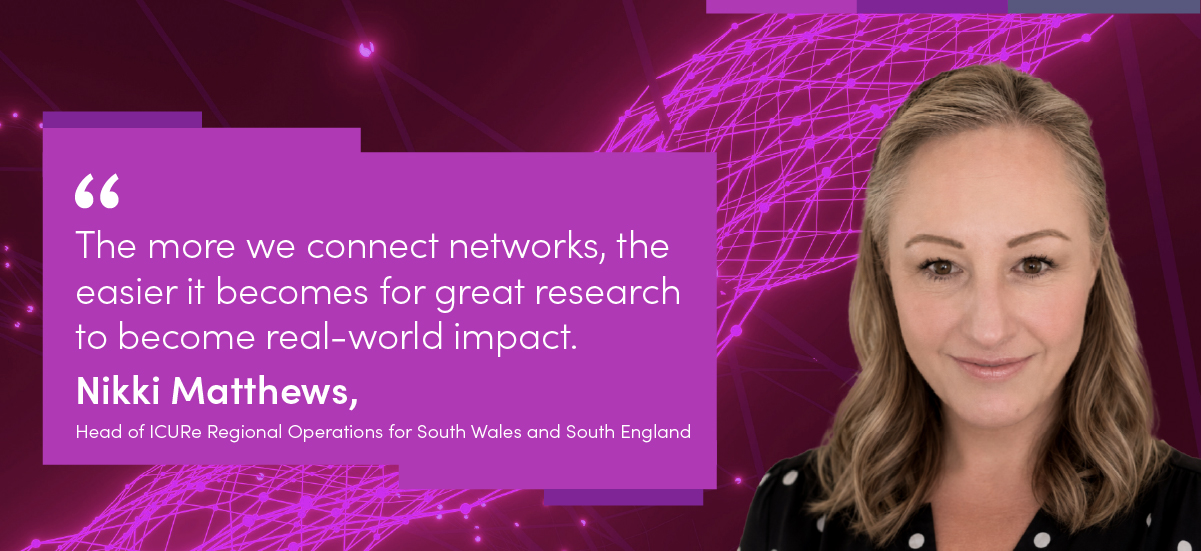
What regional operations add is local intelligence. Across South Wales and South England, we have strong clusters, active accelerators, regional investors and government partners. That can help researchers find the right route to market. The more we connect those networks, the easier it becomes for great research to become real-world impact.
Are there any successes, collaborations or stories from the region that demonstrate the impact ICURe can have?
Two examples always come to mind. Ziylo was one of the first teams to go through ICURe, spinning out from Bristol in 2014 before being acquired by Novo Nordisk in 2018 for £623 million. Founder Harry Destecroix has continued to support local businesses after ICURe, co-founding Science Creates in Bristol, now home to dozens of deep-tech start-ups, including ICURe spin-outs, as well as its own venture capital arm.
CanSense is another powerful example – a Swansea-based spin-out developing an early diagnostic blood test for bowel cancer. Alongside its profound business success, raising over £3.5 million, the human impact has been enormous. When bowel cancer is caught at its earliest stage, more than 90% of patients can expect to be successfully treated or cured.
Those stories show both the economic ripple effect and the human impact that can come from university research. It’s the exact impact that has defined ICURe’s success.
Looking ahead, what are you most excited about for ICURe’s work across South Wales and South England, and what would you like researchers and partners to know about getting involved?
I’m excited by the pathways we are building between researchers, universities, funders, investors and accelerators. The new SETsquared ICURe Alumni Network is a big part of that, as are investor events and showcases that give alumni more visibility in front of the right audiences.
For researchers and partners, my message is simple: keep an eye on the ICURe website, stay close to the programmes that are emerging, and talk to us early. There are more routes opening, particularly through research council-linked pathways, and the earlier we can help people navigate them, the better.
How can ICURe alumni reach out to you, and what practical things can you help with?
Alumni can reach me on LinkedIn or by email at [email protected]. Practical updates around progress, investment, milestones or spin-out activity are really helpful. I can also help connect people with Innovate UK information, opportunities and the right contacts.
One of the most important things is to tell your story; we want to hear it! Case studies, media coverage, funding news and event updates all help us amplify the work alumni are doing.
What excites you most about the potential of the research, innovation and researchers in South Wales and South England?
What excites me most is seeing knowledge make the transition from lab to market. Across this region, there are emerging and growing strengths in areas such as creative technologies, hydrogen, defence, life sciences and digital innovation, and there is huge potential to raise the visibility of that work.
SETsquared is a real powerhouse in that ecosystem. It has been delivering ICURe since 2015 and brings together regional programmes, university-based incubation, investment readiness support and events. When you combine that with the quality of research coming through South Wales and South England, there is a lot to be optimistic about.
Get all the fresh insights first! Stay up-to-date with all the
latest investment news, blogs and all things SETsquared.
Close
SETsquared is a partnership between


Close