SEARCH
Enter your search term below:
Close 
Enter your search term below:
WORLD LEADING BUSINESS SUPPORT
When people ask me about the role of the London Stock Exchange in supporting UK business, I always think it’s a big question, but also an incredibly important one.
From where I sit, working closely with companies across the UK, the London Stock Exchange isn’t just a place where businesses go to list. It’s part of a much broader ecosystem that supports companies throughout their entire growth journey, from early-stage startups to global, publicly listed firms.
One of the biggest misconceptions is that the London Stock Exchange is only relevant during an IPO. In reality, engagement starts much earlier, often years before a company ever considers going public.
In my role, I spend a lot of time speaking with private companies across the UK, helping them understand what public markets could look like and work for them. But more importantly, we’re there to support them long before that stage, helping founders understand the funding landscape, their options, and what it takes to build an investable business.
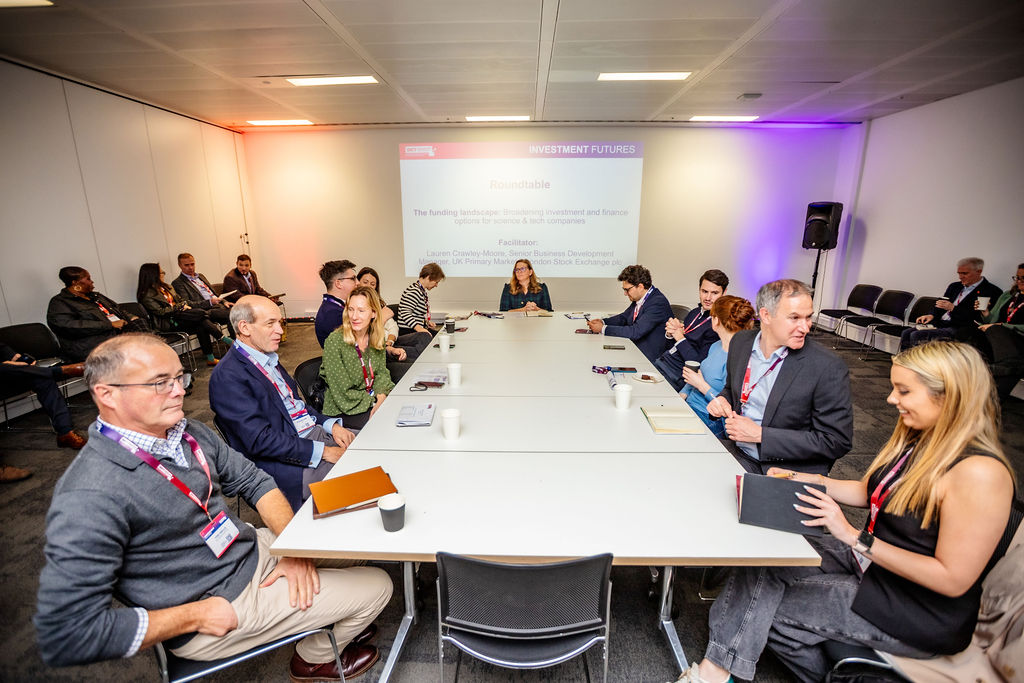
We work across what we call the ‘funding continuum’, from start-ups and scale-ups all the way through to large, established companies. That means collaborating with regional ecosystems, running events, and partnering with organisations such as the ScaleUp Institute, Innovate UK, SETsquared and the British Business Bank to ensure businesses are connected to the right support at the right time.
One thing I see time and time again is that founders often think funding means one thing: venture capital. But the reality is far more nuanced.
Many businesses today are choosing to bootstrap for longer. Others combine grant funding, angel investment, and revenue growth before seeking institutional capital. There’s also a growing focus on profitability earlier in a company’s lifecycle, rather than raising large amounts of capital pre-revenue. Excessive dilution, particularly early on, is also a concern.
The key message I always try to share is this: there is no single path. Every business is different, and understanding the full range of funding options is critical.
One of the biggest challenges I hear from founders across London, the South East and the South West is what happens at the scaleup stage. The UK is very good at backing innovation and early growth, but once companies move beyond Series A, access to the next pools of capital can become harder, and too often that’s the point where businesses feel pushed to look overseas.
The opportunity is to help companies start, grow, scale and stay in the UK, and that’s where joinedup capital markets really matter. AIM continues to play a crucial role in supporting ambitious growth companies as they step into public markets, while newer innovations like PISCES and the London Stock Exchange’s Private Securities Market help bridge that journey by creating liquidity and access to capital while companies remain private. Together, they’re about expanding the options available to founders, supported by stronger participation from long-term domestic capital, so scaling a great UK business doesn’t require leaving the UK behind.
PISCES is designed to tackle some of the challenges growing companies face by creating a new form of private‑company liquidity. In practical terms, it allows shares in private companies to be traded at set points, giving early investors and employees the chance to realise value without forcing a company into an early IPO or sale.
For many companies across our regions, the choice between staying private, selling, or going public can feel very binary. PISCES introduces a fourth option, giving founders more flexibility, while supporting continued growth and independence.
It also helps unlock capital further down the chain. When early investors are able to exit, that capital can be recycled back into new businesses locally, strengthening regional ecosystems and supporting the next generation of founders.
Despite the challenges of recent years, global uncertainty and economic volatility, the London Stock Exchange remains a cornerstone of European capital markets.
London continues to be the most active market in Europe, accounting for a significant share of capital raised across the region. And importantly, the pipeline of companies looking to go public remains strong.
Good businesses with strong fundamentals and ambitious management teams can still access public markets. The opportunity hasn’t disappeared; it’s just become more selective.
If there’s one thing I always come back to, it’s this: we should be incredibly positive about UK business.
We have world-leading universities, one of the strongest start-up ecosystems globally, and a constant stream of innovative, ambitious founders building remarkable companies.
Yes, there are challenges, particularly around scale-up funding and market conditions, but the fundamentals are strong; and there are a range of initiatives underway to improve the availability of growth capital.
Every day, I meet founders doing extraordinary things. And I firmly believe that with the right support, capital, and infrastructure, we’ll continue to see UK companies thrive on both a national and global stage.
Download the Investment Futures reportsGet all the fresh insights first! Stay up-to-date with all the
latest investment news, blogs and all things SETsquared.
Close
SETsquared is a partnership between


Close