SEARCH
Enter your search term below:
Close 
Enter your search term below:
WORLD LEADING BUSINESS SUPPORT
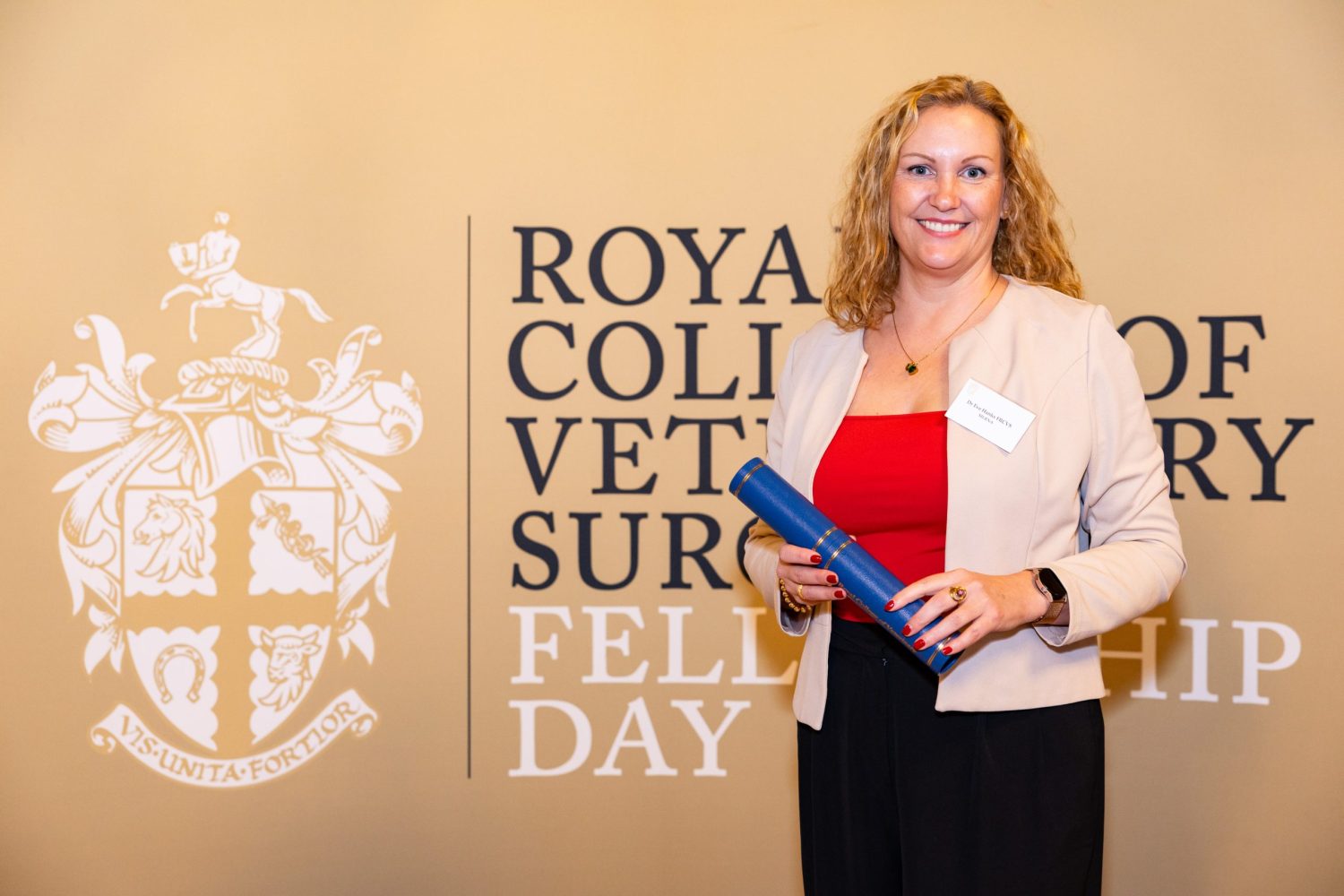
For Eve Hanks, Founder and CEO of MI:RNA Diagnostics, that journey didn’t begin in a start-up accelerator or a boardroom – it began in veterinary clinics.
Her path into entrepreneurship began with over a decade of work as a veterinary surgeon, treating horses, cattle, cats, and dogs. Later, a move into immunology research led her to spin out MI:RNA, a biotechnology company developing new diagnostic technologies using microRNA biomarkers and artificial intelligence.
Here, Eve shares her journey, lessons learned, and advice for future founders in her own words.
After training as a veterinary surgeon, I spent around 13 years working in clinics, from urgent care to telemedicine. Alongside that work, I developed a growing interest in research and diagnostics, which eventually led me to pursue a PhD in immunology at the University of Glasgow.
It was during that time that I first encountered microRNAs. At the time, they were still relatively new to science, and researchers were only beginning to understand their role in regulating genes and disease development.
What fascinated me most was their potential for diagnostics. By that stage in my career, I had experienced diagnostics from three different perspectives: as a veterinary clinician, clinical pathologist, and researcher. All highlighted the same challenge: diagnosing disease early and accurately is incredibly difficult.
MicroRNA technology offered a new approach and ultimately led me to spin out MI:RNA from the university, launching a company focused on transforming diagnostics using AI.
Starting a company as a scientist is both exciting and daunting.
MI:RNA launched shortly before the COVID-19 pandemic, meaning our early growth coincided with an uncertain global environment. Laboratories closed, research programmes paused, and investment markets became more cautious. On top of that, rising energy costs and global conflicts added pressure. Like many founders, I had to adapt quickly.
Those early challenges pushed me far outside my comfort zone, but they accelerated my growth. Pitching, networking and learning the language of business helped me become a more confident and effective leader.
Surrounding myself with the right people made the biggest difference. Bringing on a co-founder balanced the scientific and commercial sides of the business, and later pursuing an MBA strengthened my decision-making.
That openness to growth laid the foundation for something bigger. As the company expanded, we built a diverse, globally distributed team spanning nine countries. For any founder, understanding that your journey will involve a steep learning curve is so important. Embrace uncertainty – it can lead to extraordinary opportunities.
Looking back, one of the most important factors in MI:RNA’s development has been accessing networks. Accelerators, incubators and innovation programmes play a vital role in helping founders build relationships and access expertise.
Many programmes offer fantastic benefits, but the ones that had the biggest impact for us provided personalised support and meaningful connections. The vHive Incubator, in collaboration with SETsquared Surrey, and the pet‑healthcare‑focused LEAP accelerator both came at exactly the right moments in our journey, helping us move from a promising science spin-out to a focused, scalable business. It offered tailored guidance, valuable resources, and a network of contacts we wouldn’t have reached on our own. Even today, we benefit from the ongoing community and connections long after the formal programme ended.
In sectors like animal health and biotechnology, professional networks can be relatively small. Being introduced to the right collaborators, advisors, or investors can make a significant difference.
As MI:RNA has grown, one element that has remained central: culture. External networks matter, but your internal environment is paramount to scaling effectively.
We’ve always aimed to create a workplace that values diversity – not just in terms of gender, but across cultures, experiences and perspectives. Our team includes people from many different countries and backgrounds. Rather than enforcing a single uniform culture, we encourage individuals to bring their own perspectives into the organisation. Culture, like society, should evolve naturally, shaped by the voices within it.
Innovation thrives when different viewpoints interact, challenge assumptions, and approach problems in varied ways. A strong culture built on this foundation doesn’t just create a great team – it creates a team capable of exceptional work.
Reflecting on my journey, there are a few lessons that stand out – particularly for women entering science and innovation sectors or becoming first-time founders.
Self-awareness matters. Understanding your leadership style helps you recognise your strengths and where you might need support. No founder has all the skills required to build a company from start to finish. Build a team that complements your strengths and fills the gaps in your expertise. Asking for help is not a weakness; in many ways, it’s one of the strongest signals of leadership.
Persistence is key. Entrepreneurship rarely follows a straight line. Unexpected challenges – financial, operational or personal – will arise. What matters is the ability to keep learning and adapting.
Remain open to where your career might take you. My journey moved from veterinary medicine to immunology research and eventually to biotech entrepreneurship. None of those transitions were planned from the start, but each stage provided knowledge and experiences that shaped the next opportunity. Often, the most exciting possibilities emerge where you least expect them.
Across science, technology and entrepreneurship, more women are stepping into leadership roles and shaping the direction of innovation. That progress is encouraging.
But continued investment in supportive ecosystems, including accelerators, mentorship programmes and research networks, remains essential to ensure women have equal access to opportunities and resources.
Visibility matters. When diverse voices share their experiences of building companies, navigating challenges and leading innovation, it inspires the next generation to see those paths as achievable. The more diverse those voices, the stronger the innovation ecosystem becomes.
Get all the fresh insights first! Stay up-to-date with all the
latest investment news, blogs and all things SETsquared.
Close
SETsquared is a partnership between


Close